Clinical Evidence

ANTIMICROBIAL EFFICACY DEMOSTRATED IN VIVO AND IN VITRO

19th International Conference on Wound Management 25th -26th May, 2017 – London (UK)
R. Cassino, V. Dissette, C.A. Bignozzi, D. Pazzi

Study objective

Comparison between SCX technology (silver-based spray) and Silver Sulfadiazine (SSD) in the management of infectious wounds.


Methodology

  • Patients with infectious wounds
  • Comparative evaluation: SCX spray vs SSD
  • Monitoring infection signs and wound evolution

Key findings

  • SCX demonstrated superior efficacy compared to SSD
  • Faster reduction of infection signs
  • Improved wound healing environment
  • Better local tolerance

Clinical relevance

  • Modern alternative to traditional SSD therapy
  • Supports local infection control
  • Optimizes wound healing conditions
  • Suitable for routine clinical use

In Vitro

In vitro efficacy tests of SCX versus SSD performed on a pool of 5 strains: Pseudomonas Aeruginosa, Staphylococcus aureus, Escherichia Colocus hirae and Candida Albicans.

Results after incubation in Petri dishes at 37° C of 100 μl of the pool with SCX and SSD:

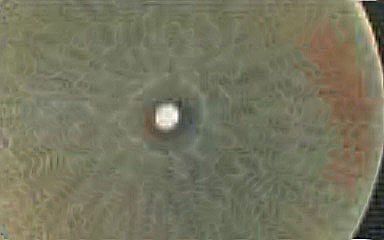
SCX - 5 days after

SCX has demonstrated a large ring of inhibition lasting for more than 5 days.
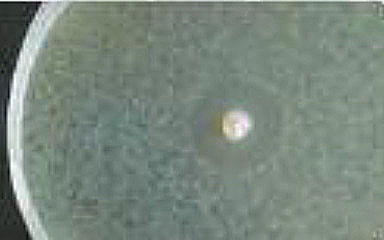
SSD - 5 days after

SSD has demonstrated a good ring of ihibition that lasted 24 hours, but after 5 days there were no longer signs of inhibition
In Vivo

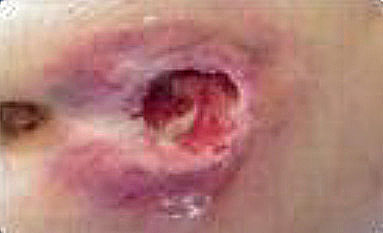
Evaluation performed on 10 chronic infected lesions treated with SSD powder spray every 48 hours for 14 days and, after worsening, treated with SCX powder spray every 48 hours for 14 days.

Complete disappearance of clinical signs of infection.
Disappearance of erythema at the edges of the lesion. Perfect results correspondance between antimicrobial action in vitro and in vivo.

Beginning of the study

After 14 days of treatment with silver sulfadiazine (SSD)
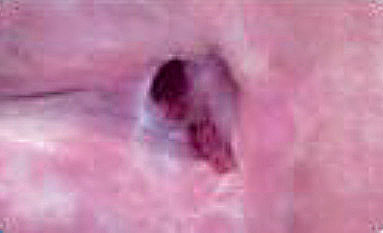
After 14 days of treatment with SiO2 Ag+ Chlorhexidine (SCX powder spray)

Conclusion

SCX technology is more effective than Silver Sulfadiazine (SSD) in the management of infectious wounds, offering improved clinical outcomes and better tolerability.
SilverSulfaDiazine Treatment
Infection Signs* W. E. Erythema**
T0 T7 T14 T0 T7 T14
2.2 2.7
+22.7%
3.8
+72.7%
1
10%
5
50%
10
100%
SiO2-Ag+Chlorex Treatment
Infection Signs* W. E. Erythema**
T0 T7 T14 T0 T7 T14
3.8 1.6
-57.9%
0.3
-92.1%
10
100%
2
20%


CLINICAL EVIDENCE – DIABETIC FOOT

L’uso dell ‘ argento ionico nella cura del piede diabetici : preventione e trattamento dell’ infectione
Roberto Cassino, AnnaMaria Ippolito

Indication

Infected diabetic foot ulcers

Mechanism

  • Broad antimicrobial effect
  • Reduces bacterial load
  • Controls exudate

Clinical benefits

  • Reduced infection signs
  • Improved tissue condition
  • Supports granulation

Outcome

  • Faster lesion evolution
  • Improved healing conditions
  • Good tolerability

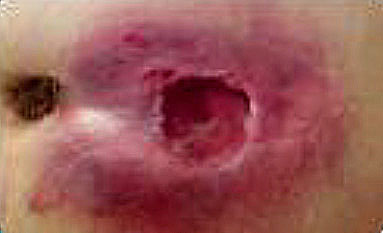
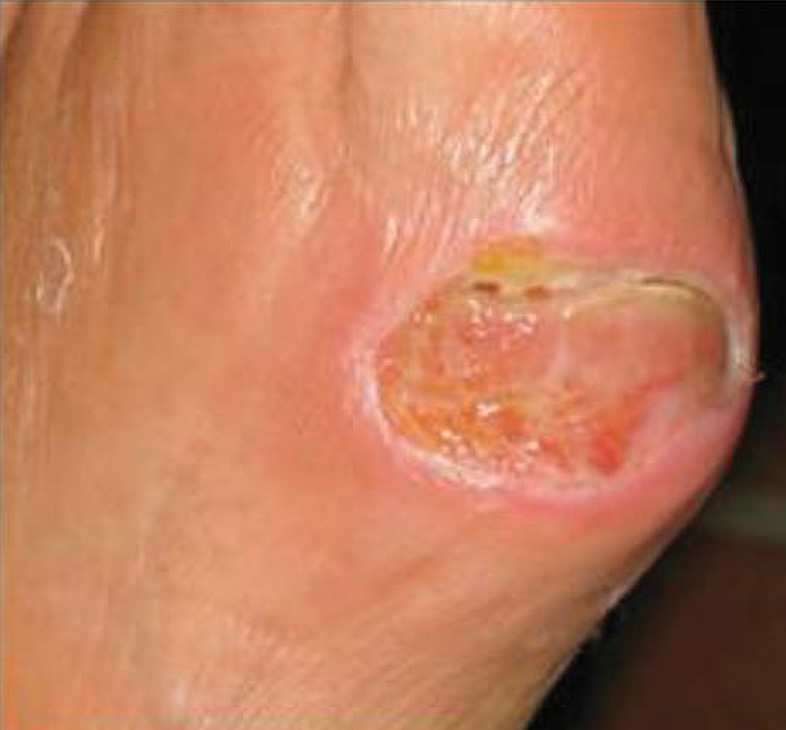
Before treatment

Diabetic foot ulcer – infected lesion
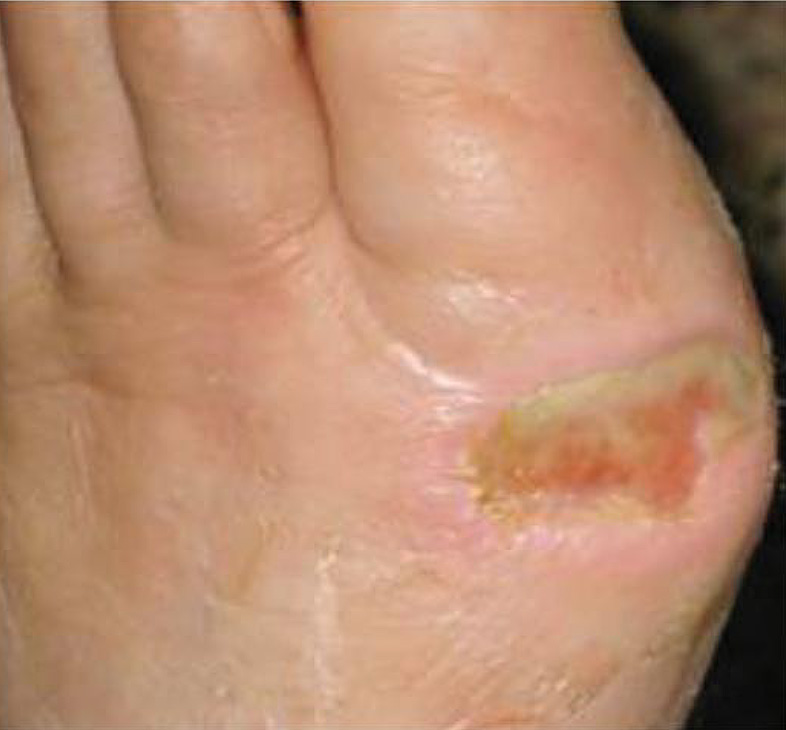
After 14 days of KAdermin Spray application

Clinical signs of infection disappeared and lesion size was significantly reduced


TRIPLE ACTION ON CHRONIC LESIONS

6th Congress of WORLD UNION of WOUND HEALING SOCIETIES – Abu Dhabi, UAE
R. Cassino RSA “Sacra Famiglia“ Pieve del Cairo (PV)

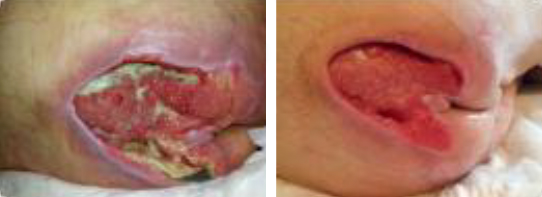
Clinical trial carried out on 30 patients divided into 3 groups of 10 each with different wounds and targets: All wounds have been treated with SCX cream; moist gauzes as secondary dressing, change of medication every 48 hours and 3 weeks of observational time.

Group 1: Colonized wounds with slough (WBP score C)

Lesions of Group 1 achieved the removal of the slough showing a good and viable granulating tissue (WBP score B in 70% and A in 30%);

Slough removal
within 12 days

Group 2: Infected wounds
 

In Group 2 all infected lesions showed complete disappearance of clinical signs of infection within the observation period.
 

Disappearance of infection signs
within 2 weeks
Group 3: Sacralbedsores

No infectious complications in bedsores of the Group 3 and a good trend in the healing process.


CLINICAL EXPERIENCE IN PEDIATRIC PATIENTS

Department of Paediatric Surgery, Department of Paediatric Surgery and Intensive Care, Division of Surgery, University Medical Centre Ljubljana
Marjanca Kovše, MNSc, Sabina Kaplan, registered nurse

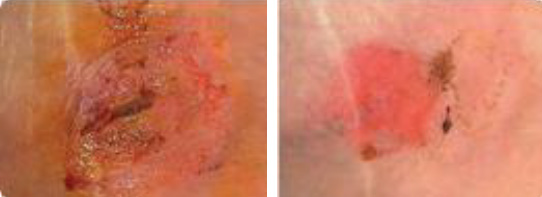
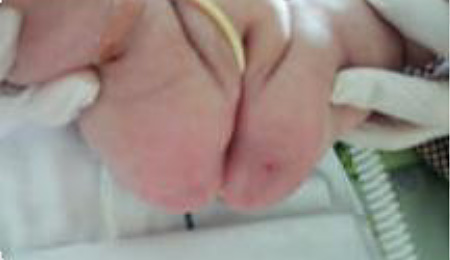
At the Department of Pediatric Surgery, we monitored three children with inflamed and macerated skin. We used KAdermin antimicrobial spray, which was applied to the clean and washed skin surface several times a day.
The spray proved to be good for treating macerated skin and fungal rash, as the skin breathes under the sprayed layer. The improvement was rapid.


FIRST CASE

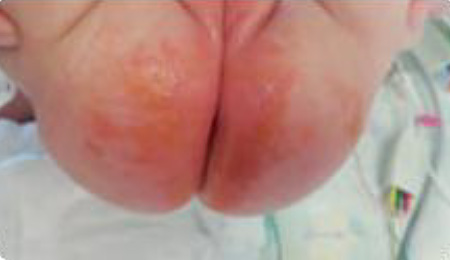
The first child is a premature infant (33 weeks) who was operated on at birth due to the transposition of the great arteries, and later due to hydrocephalus. She was fed via a nasogastric tube, and spoon-feeding was gradually introduced at the age of 6 months. The increased defecation resulted in gluteal redness that occurred on 1 October 2018.

Before treatment
After 10 days of KAdermin Spray application

Visible reduction of erythema and skin irritation, with progressive skin recovery
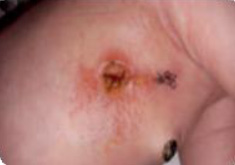
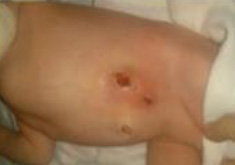
SECOND CASE

Descendostomy and mucous fistula were performed due to atresia of the anus. Both stomas and the area between the stomas were covered by pads soaked in a physiological solution. Although the pads were changed regularly, fungal infection of the skin occurred on 9 February 2019 and resulted in a wound. We decided to use the antimicrobial spray along the bandage. On 18 February, the wound was healed and
we were able to place the stoma bag.

Before treatment
After 9 days of KAdermin Spray application

Reduction of inflammatory signs and progressive healing of the affected skin area



Randomized Blind Study EPUAP Meeting, Ghent (Belgium), 2015

18th Annual European Pressure Ulcer Advisory Panel Meeting
16th – 18th September, 2015 – Ghent, Belgium

ANTISEPTIC DRESSINGS: A COMPARISON IN A RANDOMIZED BLIND STUDY

Study Design

• 15 patients with infected pressure ulcers
• 3-week treatment period
• Comparison between:
      – Povidone-Iodine Gauze
      – Activated Charcoal + Silver Dressing
      – SiO₂ + Ag⁺ + Chlorhexidine (SCX Technology)

Key Results

Activated Charcoal + Silver: 6.0 → 0.6 infection signs
Povidone-Iodine Gauze: 5.4 → 3.8 infection signs
SCX Technology (KAdermin): 6.0 → 0.0 infection signs

Key Takeaway

Complete resolution of infection signs after 3 weeks.

SCX Technology demonstrated superior infection control compared with povidone-iodine gauze and performed at least as effectively as silver dressings.


SIGNS OF INFECTION
Products Beginning of the study End of study (3 weeks)
Activated Charcoal & Silver 6.0 0.6
Povidoiodine Gauze 5.4 3.8
SiO2– Ag+ Chlorex 6.0
Mean values of the number of infection signs (Cutting & Harding Criteria)
AREA REDUCTION (or VARIATION)
Products End of study (3 weeks)
Activated Charcoal & Silver – 3.5%
Povidoiodine Gauze + 7.4%
SiO2– Ag+ Chlorex – 25.6%
Mean values of the wound area reduction/variation


Clinical Evidence in Venous Leg Ulcers

Clinical Evidence in Venous Leg Ulcers (VLU) EWMA Congress,
Bremen (Germany), 2016

SCX Technology demonstrated clinical efficacy in venous leg ulcer management and enhanced healing outcomes when combined with standard therapy.

Study Design

• 40 patients with venous leg ulcers (<6 months duration)
• 8-week treatment period
• 4 treatment groups (10 patients/group)

Group 1: Compression therapy
Group 2: Compression + Diosmin
Group 3: Compression + SCX Technology
Group 4: Compression + Diosmin + SCX Technology

Objective

To evaluate the synergistic effect of pure synthetic diosmin and SCX Technology (SiO₂ + Ag⁺ + Chlorhexidine).

Key Finding

All treatment groups achieved wound area reduction, with the greatest improvement observed when diosmin and SCX Technology were used together.


MEAN AREA REDUCTION
Group 1 Group 2 Group 3 Group 4
62.7% 71.6% 72.5% 78,6%
Control + 14.2% + 15.7% + 25.4%
Group 1
62.7%
Group 2
71.6%
Group 3
72.5%
Group 4
78,6%